Sleeping Inside History: DTLA's Most Stunning Hotel Conversions

Photo by Photo by Master Wen on Unsplash on Unsplash
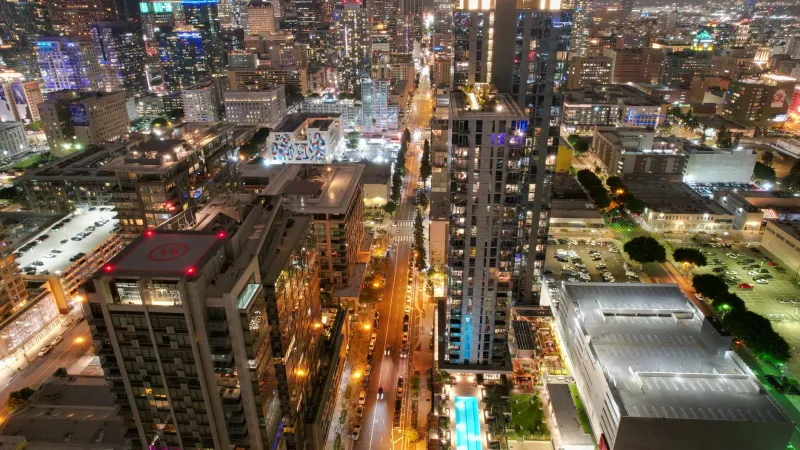
There's a moment that happens to almost every guest who checks into one of Downtown LA's converted historic hotels. You step through the lobby, look up at a vaulted ceiling or a hand-painted frieze, and think — wait, what was this place before? That question is exactly the point. Downtown Los Angeles is in the middle of a hotel renaissance, and the most compelling chapter isn't being written in glass towers. It's being told through rescued buildings that were once given up for dead.
Adaptive reuse — the practice of converting old structures into new uses — has been quietly reshaping DTLA's skyline and its hospitality scene for the better part of two decades. But in recent years, the pace has accelerated dramatically, and the results are some of the most visually arresting, story-rich hotels in the entire country.
Why Old Buildings Make for Better Hotels
Let's be honest: a lot of modern hotels look the same. Same neutral palette, same floating vanity, same curated minibar. There's nothing wrong with that, but it doesn't exactly give you a story to tell back home. Historic conversions flip that script entirely.
When developers take on a century-old building, they're inheriting character that simply can't be manufactured — 14-foot ceilings, terrazzo floors, ornate ironwork, hand-laid tile. The bones of these structures force a certain kind of creativity. Designers have to work with the architecture rather than imposing a brand template on top of it. The result tends to feel more human, more textured, and far more memorable.
For travelers who are tired of cookie-cutter accommodations, that authenticity is worth paying for. And DTLA happens to have an extraordinary inventory of old buildings just waiting to be rediscovered.
The Art Deco Era Lives On
Downtown LA experienced a massive construction boom in the 1920s and early 1930s, which means the neighborhood is absolutely loaded with art deco architecture. Zigzag facades, gilded lobbies, geometric ornamentation — the style defined an era of optimism, and a surprising amount of it survived decades of neglect.
Several of DTLA's most celebrated hotel conversions lean hard into this heritage. The Ace Hotel Downtown LA, housed in the former United Artists Theatre building on Broadway, is probably the most famous example. The Spanish Gothic architecture of the theater is jaw-dropping, and the hotel's design team made the smart choice to let the original bones do most of the heavy lifting. Guests aren't just booking a room — they're booking a connection to a building that Charlie Chaplin and Mary Pickford once had a hand in creating.
Further along Broadway, the historic theater district (a stretch of old movie palaces that once rivaled Hollywood for glamour) has become a focal point for restoration-minded developers. Even buildings that haven't yet been converted are being eyed as future hotel projects, which says a lot about where the market is heading.
From Bank Vaults to Boutique Stays
Not every conversion project starts with a theater. Some of DTLA's most dramatic transformations have involved former commercial and financial buildings — structures that were built to project power and permanence, and that translate surprisingly well into high-end hotel spaces.
Think about what a former bank lobby offers: soaring ceilings, marble floors, massive windows, and structural details that were designed to inspire confidence. Repurposed as a hotel bar or event space, those same features inspire something closer to awe. Several properties in the Financial District and the Historic Core have leaned into exactly this dynamic, turning what were once sterile office environments into warm, inviting hospitality spaces.
The challenge — and the opportunity — is always in the details. How do you run modern HVAC through a building that was designed before air conditioning existed? Where do you put the elevator shafts? How do you meet ADA requirements in a structure with irregular floor plates? The developers and architects who solve these puzzles well end up with hotels that feel both historic and completely livable.
Preservation With a Purpose
One of the most compelling arguments for historic hotel conversions is that they actually save buildings. Without a viable economic use, many of DTLA's old structures would continue to deteriorate or face demolition. Hotels provide the revenue stream that makes serious, long-term preservation financially sustainable.
The City of Los Angeles has increasingly recognized this, offering incentives and streamlined permitting for adaptive reuse projects in the downtown core. The result has been a wave of investment that's done more for architectural preservation than any single policy could accomplish on its own. When a developer puts $50 million into restoring a neglected landmark, the neighborhood around it tends to follow.
For guests, this means that choosing one of these hotels is a small act of civic participation. Your room rate is, in a very real sense, helping to keep a piece of Los Angeles history standing.
What to Look for When You Book
If you're specifically interested in staying somewhere with genuine historic character, a few things are worth checking before you commit. Look for properties that are listed on the National Register of Historic Places or designated as LA Historic-Cultural Monuments — those designations typically mean the building's most significant features have been protected through the renovation process.
Also, don't be shy about asking the hotel directly about the building's history. The best converted properties embrace their past enthusiastically and can point you toward original architectural details, historical photos, and stories about previous tenants. That kind of context transforms a hotel stay into something closer to a living history experience.
Finally, consider the location. DTLA's historic buildings are concentrated in a handful of walkable neighborhoods — the Historic Core, the Arts District, and the Broadway corridor especially. Staying in one of these areas puts you within easy reach of galleries, restaurants, and street life that complement the architectural experience.
The Bigger Picture
The historic hotel boom in Downtown LA isn't just a real estate trend. It's a statement about what travelers actually want — connection, authenticity, and a sense that where they're sleeping matters beyond the thread count. DTLA's old buildings, once seen as liabilities, have turned out to be some of the neighborhood's greatest assets.
If you've been defaulting to the same branded hotel experience out of habit, a stay in one of these converted landmarks might be exactly the reset you didn't know you needed. The history is already there. All you have to do is show up.