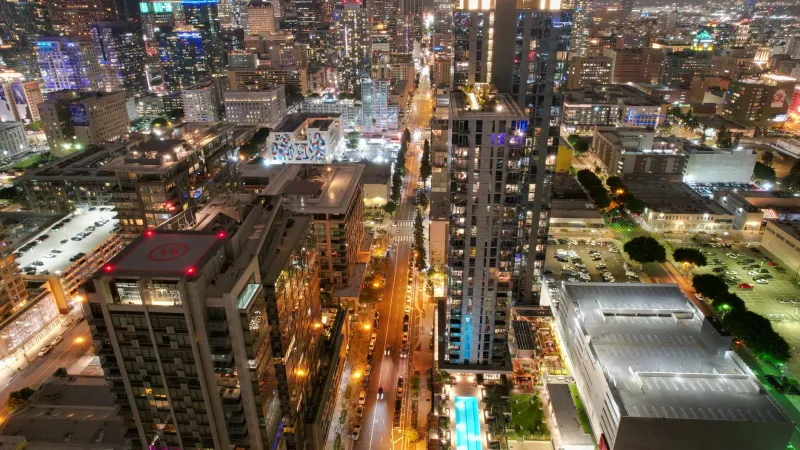
Day Trip Central: Why a Downtown LA Hotel Is the Smartest Base for Exploring All of Los Angeles

Photo by Photo by Daphne Fecheyr on Unsplash on Unsplash
There's a version of an LA trip where you rent a car, book a hotel near the beach or the airport, and spend half your vacation sitting in traffic. It's a perfectly fine way to visit. Then there's the smarter version—the one where you plant yourself in downtown Los Angeles, step out your hotel door, and have the entire city within striking distance before you've finished your morning coffee.
DTLA's central location is genuinely underappreciated. Visitors tend to think of downtown as one destination among many rather than what it actually is: a geographic hub that makes almost everything else in Los Angeles dramatically more accessible. Once you start mapping out the math, it changes how you plan the whole trip.
The Transit Advantage Nobody Talks About
Los Angeles has a reputation as a car-mandatory city. That reputation is increasingly outdated, especially when your starting point is downtown. Union Station—one of the most architecturally stunning train stations in the country, and worth a visit on its own—sits at the northeastern edge of downtown and serves as the hub for Metro's entire rail network.
From Union Station, you can reach Pasadena on the Gold Line, Hollywood and Koreatown on the Red Line, and Culver City (a quick connection away from the beach) on the Expo Line. The Metro system isn't perfect, but for day-tripping purposes it's remarkably functional, and it costs a fraction of what parking and gas would run you.
For destinations the Metro doesn't reach directly, rideshares from downtown are almost always cheaper than from the Westside or beach areas—simply because you're not already paying the premium of a tourist-dense neighborhood.
The Getty: Easier Than You Think
The Getty Center is one of LA's true world-class institutions—free admission, stunning architecture, and a permanent collection that would be the crown jewel of most cities. It's also perched on a hillside in Brentwood, which sounds inconvenient from downtown. It's less complicated than it appears.
The most straightforward route: take the Expo Line toward Santa Monica, transfer to a connecting bus toward the Getty, and you're there without ever renting a car. The full trip runs about an hour, which is often comparable to driving when you factor in parking logistics. Alternatively, a rideshare from downtown to the Getty typically runs in the $25–$35 range depending on traffic and time of day.
Plan to arrive when the museum opens. The tram ride up the hill, the garden views, and the less-crowded galleries are all significantly better before noon.
Griffith Observatory: A Half-Day Worth Every Minute
Griffith Observatory sits above Los Feliz and offers arguably the best view of the LA basin—and the Hollywood Sign—that most visitors will ever get. It's also completely free to visit (planetarium shows cost extra).
From downtown, the Red Line to Vermont/Sunset puts you close. From there, the DASH Observatory bus runs directly to the hilltop on weekends, which eliminates the parking headache entirely. The hike from the base of Griffith Park to the observatory is a legitimate option for the energetic traveler—about a mile and a half with steady elevation gain, but the views en route are worth it.
Griffith pairs well with a stop in Los Feliz Village before or after—great coffee shops, bookstores, and some of the best neighborhood restaurants in the city.
Santa Monica and the Beach: A Full Day Out West
Beach days from downtown are absolutely doable, and the Expo Line makes them more accessible than most people expect. The train runs from downtown to Santa Monica's 4th Street station in roughly 45–50 minutes. From there, you're a short walk to the pier, the beach, and the Third Street Promenade.
The practical move is to head out midmorning and plan to return in the early evening before the post-beach rush hits. Bring a bag you can stow your hotel key and a change of clothes in—there are paid changing facilities near the beach—and you'll have a complete beach day without the rental car math.
Venice is an easy walk or quick rideshare south from Santa Monica, and the two together make for a full day without any redundancy.
The Arts District and Highland Park: Closer Than You Think
Not every day trip requires leaving the downtown orbit. The Arts District, technically adjacent to DTLA's eastern edge, has evolved into one of LA's most interesting creative neighborhoods—galleries, independent coffee roasters, design studios, and some genuinely excellent restaurants all packed into a walkable stretch along Traction Avenue and Mateo Street.
Highland Park, a bit farther northeast along the Gold Line, has a distinct character—murals, vintage shops, a strong independent restaurant scene, and a neighborhood energy that feels authentically LA rather than curated for visitors. The train ride takes about 20 minutes from Union Station.
Which Downtown Hotels Position You Best
For transit-focused day-tripping, proximity to Union Station and the Metro Red/Purple Line corridor matters most. Hotels in the Civic Center area, around Bunker Hill, and in the Historic Core all sit within easy walking distance of multiple Metro stations. The Freehand, the Ace, and several properties along Spring and Main Streets check this box well.
For travelers who do plan to use a car for some excursions, many downtown hotels offer valet or garage parking at flat daily rates—often more economical than paying per-exit at a destination hotel closer to the freeway.
The Case for Staying Downtown
The real argument for DTLA as your LA home base isn't just logistical. It's experiential. When you're not tethered to a single neighborhood, you get to experience Los Angeles as a collection of distinct communities rather than a monolithic sprawl. Each day trip brings you somewhere new, and downtown—with its own restaurants, culture, and energy—is genuinely worth returning to each evening.
That's a different kind of LA trip. And for most travelers who've tried it, it's the kind they want to take again.