Concrete, Culture, and Comeback: Why DTLA's Hotels Are Now the City's Most Exciting Design Story

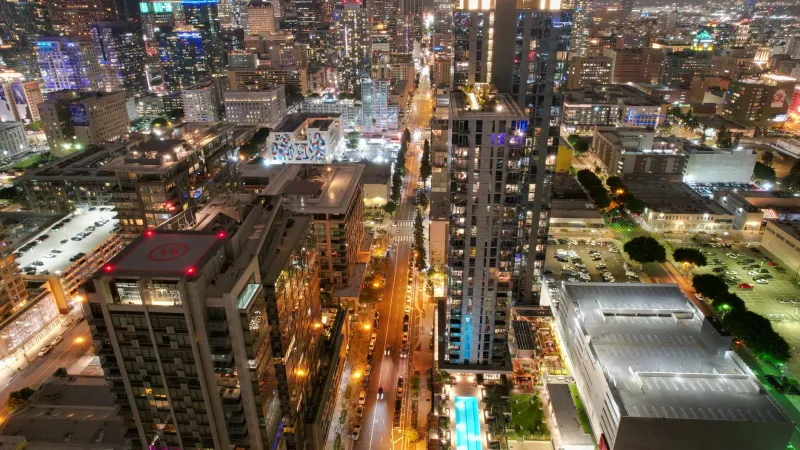
Photo by Photo by Marco Bicca on Unsplash on Unsplash
Not long ago, booking a hotel in downtown Los Angeles meant settling. The neighborhood had a reputation—unfair, maybe, but sticky—as a place you passed through rather than stayed in. The hotels reflected that. Functional. Forgettable. Fine.
That version of downtown is gone. What replaced it is something genuinely surprising: a hotel design scene that's drawing architects, interior designers, and hospitality industry insiders from across the country. DTLA isn't just catching up to cities like Miami or Austin anymore. In a lot of ways, it's lapping them.
The Buildings Were Always There
Here's the thing about downtown Los Angeles that designers keep coming back to: the bones were extraordinary all along. The neighborhood is packed with pre-war commercial buildings, Beaux-Arts bank towers, industrial warehouses, and mid-century office blocks that sat underused for decades. When the hospitality industry finally started paying attention in the early 2010s, they didn't just find empty buildings. They found raw material.
The Ace Hotel Downtown LA, housed in the former United Artists Theatre building on Broadway, set the tone for what was possible. The 1927 Spanish Gothic structure—originally built for Mary Pickford and Charlie Chaplin's film studio—was reimagined as a hotel that felt less like a renovation and more like an excavation. The design team preserved ornate plasterwork, restored the original theater, and layered in contemporary furnishings that somehow made the whole thing feel lived-in rather than museum-like. It was proof of concept for an entire neighborhood.
Adaptive Reuse as Design Philosophy
What makes DTLA's hotel design moment different from, say, Miami's Art Deco corridor or Austin's boutique boom is the sheer variety of source material. Miami is working within a relatively narrow architectural vocabulary. Austin is largely building from scratch. Downtown LA's designers are solving different puzzles in every block.
The Hoxton, which opened its DTLA outpost in the Arts District, tackled a 1920s building that had been everything from a produce warehouse to a garment factory. The design team—working with local architects—chose to celebrate that industrial past rather than sand it down. Exposed brick, original timber beams, factory-style windows. The result feels authentically rooted in the neighborhood rather than dropped into it.
A few miles away, the InterContinental Los Angeles Downtown occupies the upper floors of the Wilshire Grand Center, the tallest building west of the Mississippi. The design challenge there was the opposite: how do you create warmth and human scale inside a 73-story glass tower? The answer involved California-influenced art installations, locally commissioned pieces throughout the public spaces, and a rooftop bar experience that turns the building's sheer height into something theatrical.
Two completely different problems. Two completely different solutions. That range is what makes DTLA so interesting right now.
The Designers Weighing In
Talk to anyone working in hospitality design in Los Angeles and you'll hear the same thing: downtown is where the interesting work is happening.
Designers who've worked on DTLA projects frequently cite the neighborhood's density as both the biggest challenge and the biggest creative opportunity. Unlike resort destinations where you're designing an escape from the outside world, downtown hotels have to engage with their surroundings. The street life, the history, the grit—it all has to be part of the conversation.
That means thinking carefully about how a lobby connects to the sidewalk, how a rooftop bar frames the skyline, how a guest room window becomes a relationship with the city rather than just a source of light. In neighborhoods like the Arts District or South Park, the design brief essentially includes the entire block.
The constraint of working in historic structures also pushes creativity in ways that blank-slate projects don't. When you can't move a load-bearing wall, you have to find a different solution. When the original terrazzo floor is worth saving, you build the design around it. Some of the most striking moments in DTLA hotel spaces exist precisely because something couldn't be changed.
Where the Next Wave Is Headed
The design evolution isn't slowing down. Several new properties in various stages of development are pushing the conversation further. Projects in Little Tokyo and the Historic Core are exploring how hotels can serve as genuine community anchors—not just places for visitors to sleep, but spaces that integrate with the neighborhoods around them through ground-floor retail, public art programs, and event spaces that locals actually use.
There's also growing interest in what sustainability looks like at the design level in downtown LA. Adaptive reuse is inherently sustainable—you're not pouring new concrete when you're working with existing structures—but newer projects are going further, incorporating green roofs, passive cooling systems, and materials sourced from within the region.
The aesthetic direction is moving away from the heavily curated, Instagram-ready maximalism that dominated boutique hotel design for most of the 2010s. What's replacing it is something harder to pin down but easier to feel: spaces that seem like they belong somewhere specific, that couldn't exist anywhere else. That's a high bar. In downtown Los Angeles, more and more hotels are clearing it.
Why DTLA Belongs in the Design Conversation
Miami gets the magazine covers. Austin gets the think pieces about cool. But the hotel design story that's actually worth following right now is unfolding on Broadway, in the Arts District, along Figueroa, and in the Historic Core.
Downtown Los Angeles has what most hospitality design destinations don't: a genuine city underneath the hotels. Real neighborhoods. Real history. Real texture. When designers work here, they're not creating a vibe from scratch—they're responding to something that already exists. And when they get it right, the results are some of the most compelling hotel spaces in the country.
Next time you're booking a room in LA, pay attention to where it's located and what it used to be. Chances are, the most interesting answer is downtown.