Old Bones, New Beds: How Downtown LA Is Reinventing Its Skyline One Hotel at a Time
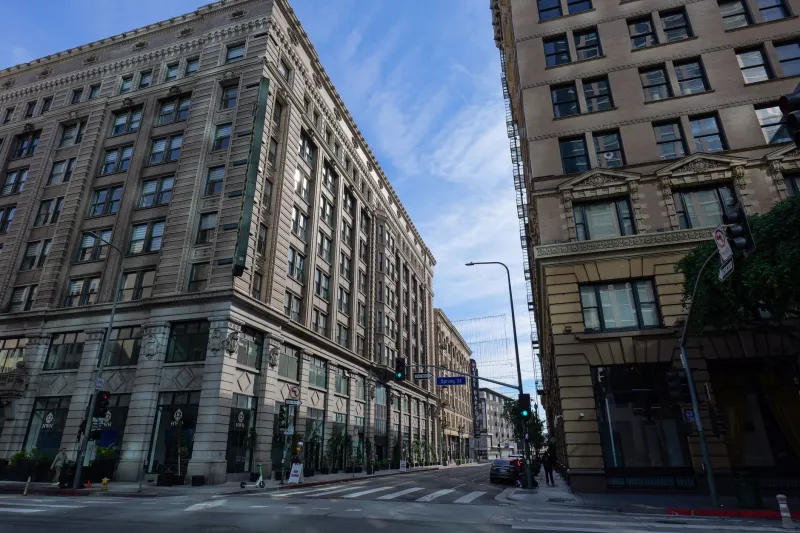
There's something a little surreal about checking into a hotel room where, sixty years ago, someone was probably filing tax returns or drafting legal briefs. But that's exactly the kind of layered, unexpected experience that's becoming a defining feature of Downtown LA's hotel scene. Across the district, a wave of adaptive reuse projects is turning long-dormant office buildings, industrial lofts, and early 20th-century commercial towers into some of the most talked-about places to sleep in Los Angeles.
This isn't just a design trend. It's a full-on rethinking of what a hotel can be — and DTLA happens to be one of the best places in the country to watch it unfold.
Why Downtown LA Is Ground Zero for This Movement
Adaptive reuse has been gaining momentum in cities across the US, but Downtown LA has a few things working in its favor that make it especially fertile ground. For one, the neighborhood is packed with pre-war and mid-century commercial buildings that were built to last. These structures — many of them constructed between the 1910s and 1950s — feature soaring ceiling heights, heavy concrete frames, and ornate facades that modern construction simply can't replicate on a budget.
Then there's the regulatory environment. California, and LA in particular, has been aggressive about creating incentives for adaptive reuse. The city's Adaptive Reuse Ordinance, which has been on the books since 1999 and has been updated several times since, streamlines the permitting process for converting older commercial buildings into residential or hospitality uses. That's a meaningful advantage when you're trying to make the economics of a historic conversion work.
And finally, there's demand. Travelers — especially the younger, experience-driven crowd that now drives a huge chunk of hotel bookings — are increasingly skeptical of cookie-cutter properties. They want a story. They want texture. They want to feel like they're somewhere, not just anywhere.
The Architecture of Memory
Step inside one of these converted properties and you start to understand what all the fuss is about. Developers who do this well aren't just slapping a coat of paint on an old building — they're having a genuine conversation with the existing structure.
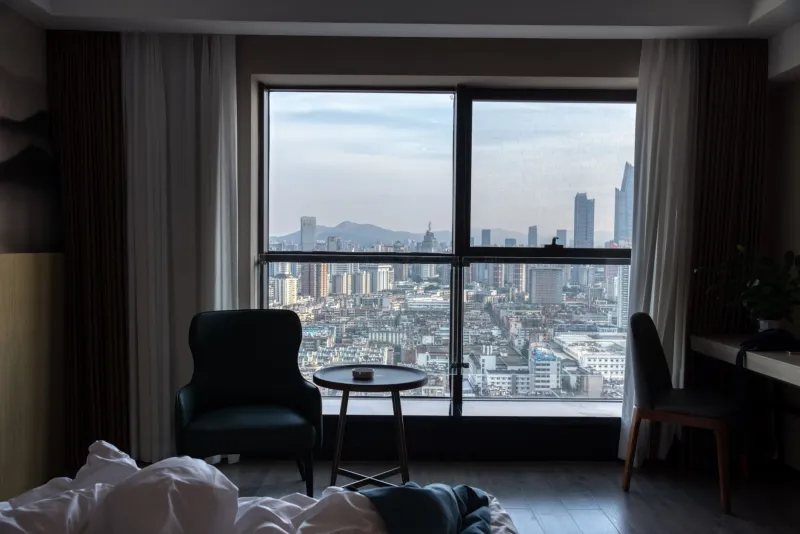
Exposed concrete columns become design features rather than obstacles. Original terrazzo floors, often buried under decades of carpet and linoleum, get uncovered and polished back to life. Steel-frame windows that once let light into open-plan offices now frame city views from guest rooms. In some cases, original signage, elevator cabs, and even mail chutes are preserved and incorporated into the overall aesthetic.
The effect is something that feels genuinely irreplaceable. You can build a new hotel that looks vaguely industrial or vaguely historic, but you can't manufacture the real thing. That authenticity is exactly what makes these properties so compelling — and, increasingly, so competitive.
Sustainability as a Selling Point (and a Real Benefit)
Beyond the aesthetics, there's a compelling environmental argument for adaptive reuse that the hospitality industry is starting to take seriously. Demolishing an existing building and constructing a new one from scratch generates an enormous amount of embodied carbon — the emissions tied up in manufacturing and transporting materials. When you retrofit and repurpose an existing structure, you sidestep a significant chunk of that environmental cost.
For hotels trying to appeal to sustainability-conscious travelers, that's not a small thing. Increasingly, guests are factoring environmental impact into their booking decisions, and being able to point to a genuine preservation story — rather than just a recycling program and low-flow showerheads — is a meaningful differentiator.
Some of DTLA's adaptive reuse hotels have leaned into this angle hard, pairing their historic bones with modern energy systems, green rooftops, and locally sourced materials for the build-out. The combination of old and new isn't just aesthetically interesting — it actually makes a lot of practical sense.
The Guest Experience Difference
Here's the thing about staying in one of these converted properties: the quirks are features, not bugs. No two rooms are exactly the same because the original building wasn't built with hotel room templates in mind. You might end up with an unusually wide room because your floor used to be an open bullpen. Or a dramatic arched window because the building's original architect had a flair for the theatrical. Or ceilings so high that the space feels more like a loft than a hotel room.
That unpredictability — which would be a liability in a conventional hotel context — becomes part of the appeal. Guests who stay in these properties tend to talk about them differently than they'd talk about a standard chain hotel. They describe the building. They tell the story of what it used to be. They post photos of the architectural details.
For travelers coming to Downtown LA specifically, these hotels also offer something else: a direct connection to the neighborhood's history. DTLA has a rich and complicated past — as a commercial hub, an industrial center, and a community that went through decades of disinvestment before its current renaissance. Staying in a building that's been part of that story, rather than one that arrived after the fact, gives visitors a different kind of access to the city.
What's Coming Next
The pipeline of adaptive reuse hotel projects in Downtown LA is still active. Several significant properties are in various stages of development or recently completed conversion, adding to a district that's already home to a handful of landmark transformations. The inventory of convertible buildings in the area — particularly along Spring Street, Broadway, and in the Arts District — remains substantial, even as the most prominent examples have already been claimed.
What's interesting is how the definition of "adaptive reuse" is expanding. Early projects tended to focus on classic office buildings from the early 20th century. Now developers are looking at mid-century structures, former department stores, industrial warehouses, and even parking structures as potential candidates. Each building type brings its own set of challenges and possibilities, which means the creative solutions being deployed across the neighborhood are getting more varied and more inventive.
A Different Kind of Downtown Stay
If you're planning a trip to Los Angeles and you're trying to decide where to base yourself, the adaptive reuse hotels of Downtown LA offer something genuinely distinct from the rest of the city's accommodation landscape. These aren't properties that could exist in Beverly Hills or Santa Monica. They're rooted in a specific place and a specific history — and that specificity is exactly what makes them worth seeking out.
Downtown LA has always been a city within a city, dense with culture, history, and energy that the rest of Los Angeles sometimes overlooks. Its hotels are starting to reflect that complexity in ways that feel exciting and, honestly, a little overdue. The bones were always there. Someone just finally decided to do something remarkable with them.